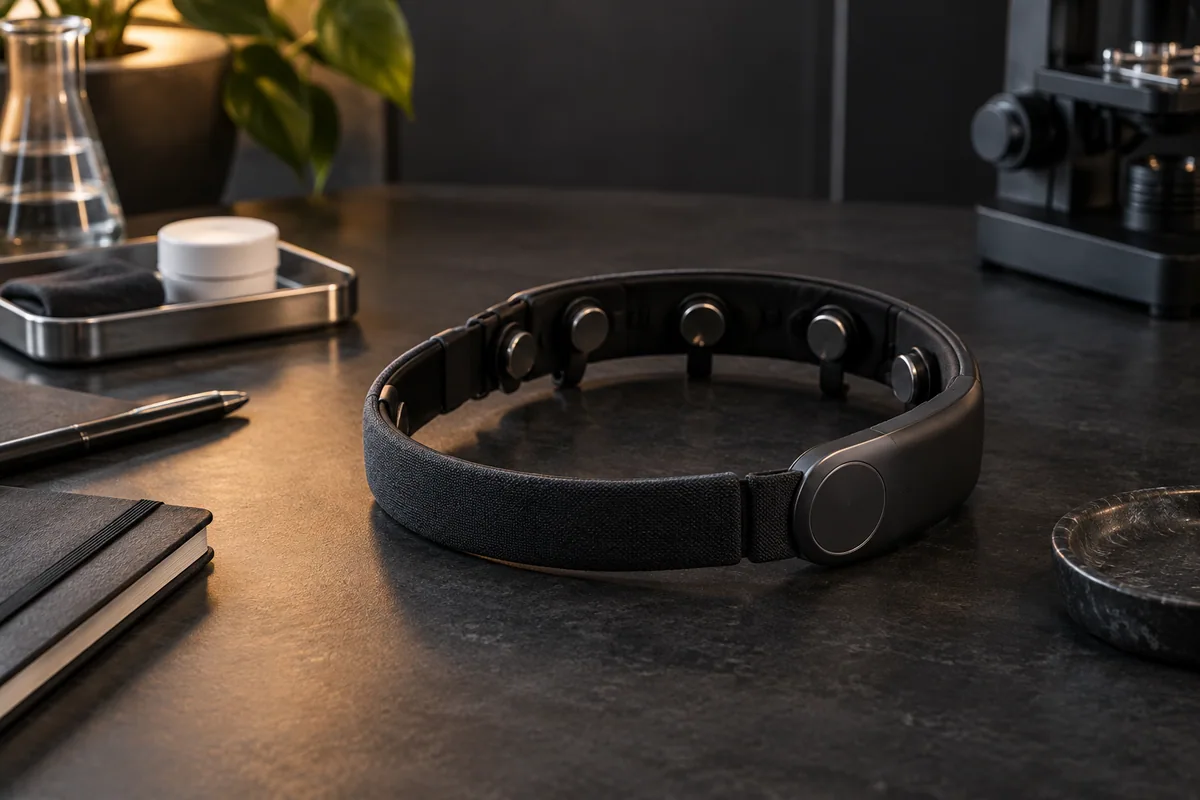
Brain–computer interfaces are an important area of assistive-technology research. They should not be described as a universally available consumer input device merely because a demonstration shows someone controlling a computer.
For software developers, the immediate challenge is to distinguish what a particular device exposes from what an application assumes about input, confirmation and recovery.
What the Device Documentation Establishes
Neuralink’s PRIME study brochure describes an investigational clinical study and identifies the study devices as not for sale. It does not support a claim of full consumer approval or a public “NeuralOS” React package. The PRIME study brochure is the source for that limited statement.
Synchron likewise identifies its BCI system as investigational and says it is not approved for commercial use. Its company statement and research page distinguish its clinical work from an ordinary consumer software release.
These sources do not provide comparable end-to-end latency benchmarks for the invented SDK table previously shown in this article.
Keep the Application Boundary Clear
A device integration might expose pointer movement, a switch-like action or a higher-level command. Those are different interfaces. An application should use the documented interface for the approved environment rather than infer raw neural signals from a product demonstration.
A useful separation is:
Documented input adapter
        ↓
Candidate application action
        ↓
Visible feedback / confirmation
        ↓
Committed action with recovery
This is a conceptual software design, not a medical-device architecture or an implementation of intent decoding.
A Worked Interaction Exercise
Consider a reading interface with “next page” and “delete saved document.”
Advancing a page is easily reversible. Deleting a document has a different consequence. The interface can keep both actions accessible through ordinary controls while giving deletion a confirmation step and a clear cancellation route.
The important design questions are concrete: Which element has focus? What action is pending? Can the user undo it? Does a repeated input trigger the action again? What happens when the adapter disconnects?
Do not invent a universal confidence threshold and trigger a destructive operation whenever a score exceeds it. A numeric confidence value only has meaning within a documented model, calibration and task.
Treat Data and Consent Explicitly
Record what the integration actually receives, where it is processed and how long the application retains it. A vendor’s device capability is not permission for an application to collect additional information.
Privacy and clinical obligations depend on the device, jurisdiction and use. This article does not establish a new “NeuroRights Act” or prescribe a clinical workflow.
For a web portfolio or product team, semantic controls, predictable focus, clear states and reversible interactions are useful work today. They also create a stronger foundation for future documented assistive-input integrations without claiming to read thoughts.

Sardar Mukhshaf
Full-Stack & DevOps Engineer
I build scalable web applications, secure backend systems, and production-ready cloud infrastructure. My engineering focus spans interface design, API architecture, deployment pipelines, and observability. Follow for more deep dives into system architecture, performance engineering, and emerging technologies.
More from the practice
Keep the useful ideas close.
Follow new articles with your preferred RSS reader.
Open the RSS feed ↗